
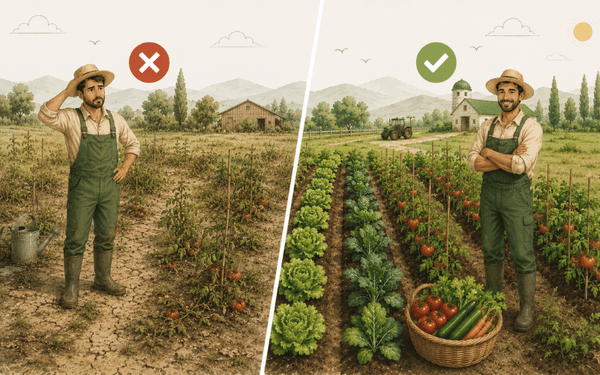
The 10 Mistakes to Avoid When Creating a Vegetable Garden: The Complete Guide for Beginners
Creating a vegetable garden is one of the most rewarding activities one can undertake. However, especially for beginners, it's easy to make small mistakes that can compromise plant health and reduce the harvest.
In this guide, you will discover the 10 most common mistakes made when creating a vegetable garden and practical tips to avoid them, so you can achieve better results from the very first season.
📌 Article Index
1. Choosing the wrong location
Why is this a mistake?
Many vegetables need at least 6-8 hours of direct sunlight per day. A location that is too shaded limits plant growth.
What are the consequences?
Weak plants, stunted growth, and lower production than expected.
How to avoid it?
Observe the ground throughout the day and choose a bright, well-drained area protected from the strongest winds.
👉 Key point: the location of the vegetable garden is fundamental for a successful harvest.
2. Not preparing the soil
Why is this a mistake?
Sowing directly on hard, compact soil makes root development difficult.
What are the consequences?
Slow growth, reduced nutrient absorption, and unsatisfactory harvests.
How to avoid it?
Dig the soil, remove stones and weeds, and incorporate compost or organic matter before sowing.
👉 Key point: a good garden always starts with well-prepared soil.
3. Planting too densely
Why is this a mistake?
The temptation to utilize every available centimeter often leads to excessively reducing the distances between plants.
What are the consequences?
Competition for water and nutrients, reduced air circulation, and increased risk of diseases.
How to avoid it?
Always follow the instructions on seed packets or plant labels.
👉 Key point: fewer, well-spaced plants produce more.
4. Incorrect sowing times
Why is this a mistake?
Every vegetable has specific needs and an ideal sowing period.
What are the consequences?
Poor germination, stunted growth, or complete crop failure.
How to avoid it?
Consult the sowing calendar for your climatic zone.
👉 Key point: respecting seasonality increases the chances of success.
5. Over or under-watering
Why is this a mistake?
Water is essential, but it must be administered correctly.
What are the consequences?
Waterlogging promotes root rot, while water scarcity causes stress to plants.
How to avoid it?
Water preferably in the early morning or evening and always check the soil moisture.
👉 Key point: balance is the key to proper irrigation.
6. Neglecting fertilization
Why is this a mistake?
Vegetable crops continuously consume nutrients from the soil.
What are the consequences?
Less vigorous plants, lower productivity, and less abundant harvests.
How to avoid it?
Use specific fertilizers and always respect the recommended dosages.
👉 Key point: fertile soil is the gardener's best ally.
7. Ignoring crop rotation
Why is this a mistake?
Constantly growing the same plants in the same spot depletes the soil.
What are the consequences?
Increased presence of pests and reduced soil fertility.
How to avoid it?
Alternate different botanical families in various areas of the garden.
👉 Key point: rotation helps maintain the natural balance of the garden.
8. Not controlling pests and diseases
Why is this a mistake?
Aphids, slugs, and fungal diseases can spread rapidly.
What are the consequences?
Damage to plants and loss of harvest.
How to avoid it?
Periodically check leaves and stems and intervene at the first signs of infestation.
👉 Key point: prevention is the most effective method.
9. Using unsuitable tools
Why is this a mistake?
Working with improvised tools makes every operation more difficult.
What are the consequences?
Greater fatigue and risk of damaging crops.
How to avoid it?
Equip yourself with essential tools and always keep them clean and in good condition.
👉 Key point: the right tools save time and energy.
10. Expecting immediate results
Why is this a mistake?
A vegetable garden requires time, consistency, and observation.
What are the consequences?
Discouragement and abandonment of the project at the first failures.
How to avoid it?
Accept mistakes as part of the process and learn season after season.
👉 Key point: patience is one of the most important ingredients for a successful vegetable garden.
🌱 Expert advice from Centro Agricolo
Creating a vegetable garden doesn't mean being perfect from the start. With the right precautions, quality products, and a little experience, every season will become an opportunity to improve and achieve increasingly satisfying harvests.
Need a hand? At Centro Agricolo, you'll find seeds, fertilizers, plant protection products, and everything you need to take care of your vegetable garden. Our team is always available to help you choose the most suitable solutions for your needs.