

























































Description
🗜️ Controlled Material Removal and Finishing
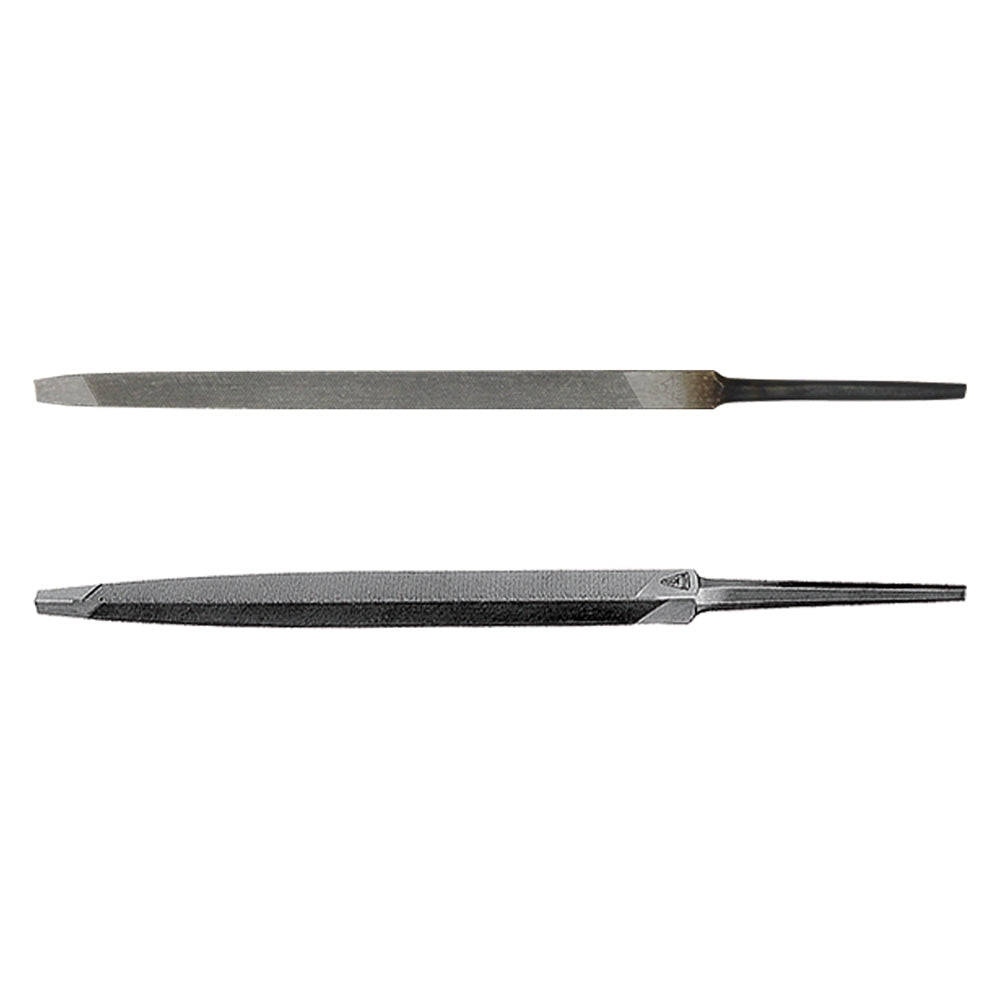
The Triangular Saw File combines verifiable features and targeted use for deburring, grinding, and manual finishing of metals or compatible materials. This product is from Bellota and is presented with data useful for comparing function, measurements, and operating conditions, without the need for unforeseen adaptations.
For the Triangular Saw File, the declared configurations include: 4-mm 100 x 3.1 x 5.5 thin edges; 5-mm 125 x 4 x 7 thin edges; 5-mm 125 x 6.5 x 10.4 regular edges; 6-mm 150 x 9 x 11.3 regular edges; 7-mm 175 x 9 x 13.1 regular edges; 8-mm 200 x 10 x 15 regular edges. Identifying the correct version before purchase allows for evaluating bulk, capacity, and compatibility with the equipment or intended environment.
✅ Specific Benefits of Use
The practical value comes from the ability to choose a configuration consistent with the actual work. In the case of the Triangular Saw File, the main benefit is related to allowing correction of profiles and surfaces with a tool chosen based on the actual geometry of the workpiece.
- Targeted efficiency: stable grip with compatible handle.
- Technical control: simple maintenance of the teeth.
- Operational practicality: profiles suitable for different types of work.
- Informed choice: controllable manual material removal.
The performance of the Triangular Saw File must be evaluated in real work, after checking assembly, adjustment, and compatibility.
🧱 Materials, Structure, and Construction
Construction analysis helps to distinguish a suitable configuration from one that is merely similar. For the Triangular Saw File, the detectable materials are those declared in the manufacturer's technical sheet. The body and teeth must remain clean and intact; the steel, treatment, and geometry declared by the manufacturer define the workable materials and the tool's lifespan.
The technical information available for the Triangular Saw File specifies: Live edges. Before use, check surfaces, fastenings, edges, and functional parts, avoiding modifications that could alter strength or compatibility.
⚙️ Technical Data and Operational Function
The correct configuration arises from comparing the declared data. For the Triangular Saw File, profile, cross-section, length, cut grade, and teeth determine the speed of material removal, precision, and surface quality. Variants must be compared considering the characteristics of the machine, the nature of the material to be treated, and the required performance level.
The function of the Triangular Saw File is geared towards deburring, grinding, and manual finishing of metals or compatible materials. The described configuration includes 4-mm 100 x 3.1 x 5.5 thin edges; 5-mm 125 x 4 x 7 thin edges; 5-mm 125 x 6.5 x 10.4 regular edges; 6-mm 150 x 9 x 11.3 regular edges; the manufacturer's manual remains the reference for limits, assembly, adjustments, and necessary protective devices.
🔧 Preparation and Method of Use
Adhering to the operational sequence is essential for working with control. When using the Triangular Saw File, use protective devices consistent with the activity and prevent access to the operating area by uninvolved persons or animals.
- Securely clamp the workpiece.
- Choose an appropriate profile and cut.
- Mount a compatible handle when provided.
- Work with regular strokes without twisting.
- Clean and store separately.
If the Triangular Saw File shows instability, friction, noises, or unexpected operation, stop work and inspect the system.
🧼 Cleaning, Storage, and Maintenance
For the Triangular Saw File, proper care after work extends the useful life of the components. Clean the teeth with a suitable brush, avoid impacts and contact between tools, protect from humidity, and replace when the cut becomes irregular.
Maintenance of the Triangular Saw File does not require improvised interventions: use only compatible methods and products.
🏡 Areas of Professional Use
For the Triangular Saw File, the primary application includes deburring, grinding, shaping, and manual finishing of metals, wood, or expressly compatible materials. The specific technical reference is: Live edges. It can be found in the equipment of demanding private individuals, green maintenance workers, and professional operators when characteristics and working conditions are compatible.
The Triangular Saw File must not be extended by analogy to unforeseen contexts, even when the application appears similar.
🎯 How to Identify the Correct Version
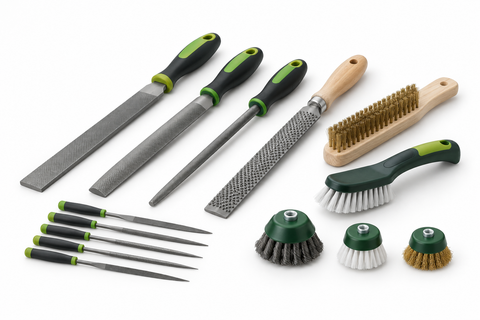
Comparing alternatives helps to avoid oversized or unsuitable purchases. For the Triangular Saw File, compare the material to be worked, the shape of the area, the cross-section of the file or rasp, the length, and the cut grade. A flat, round, half-round, square, or triangular shape responds to different geometries.
Before assembling the Triangular Saw File, check every technical reference and ask for qualified assistance in case of uncertainty.
WHY CHOOSE IT?
It is a compelling choice because the Triangular Saw File allows for correcting profiles and surfaces with a tool chosen based on the actual geometry of the workpiece. The description highlights the parameters that help understand where it can offer a concrete advantage.
Choosing the Triangular Saw File means prioritizing a verifiable solution, to be used in compliance with the specified technical conditions.