


Description
🎯 Precise Dispensing of Sealants and Foams
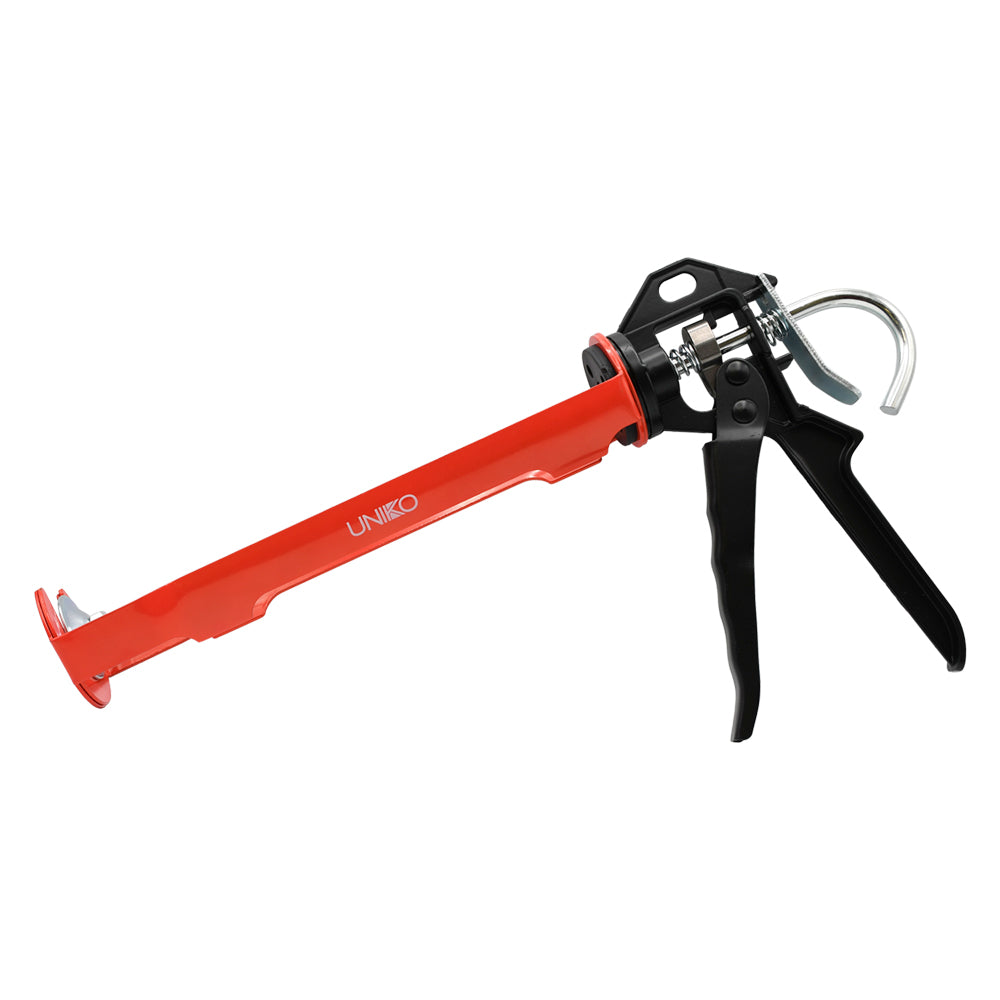
Friction Caulk Gun for Sealants and Chemical Anchors - Thrust > 2000 has been selected to methodically address tasks related to the precise extrusion of sealants, adhesives, or chemical anchors in compatible cartridges. This offering from Uniko is presented with useful data to compare function, measurements, and operating conditions, without resorting to unforeseen adaptations.
For Friction Caulk Gun for Sealants and Chemical Anchors - Thrust > 2000, the declared configurations include: friction - thrust > 2000 N. Identifying the correct version before purchase allows for evaluation of dimensions, capacity, and compatibility with the equipment or intended environment.
✅ Specific Benefits in Use
The user can compare the decisive elements before starting work. In the case of the Friction Caulk Gun for Sealants and Chemical Anchors - Thrust > 2000, the main benefit is related to making the bead more uniform and facilitating dispensing when the gun and product are correctly matched.
- Targeted efficiency: organized cleaning and maintenance.
- Technical control: thrust consistent with viscosity.
- Operational practicality: continuous dispensing control.
- Informed choice: compatibility with declared formats.
The behavior of the Friction Caulk Gun for Sealants and Chemical Anchors - Thrust > 2000 may change with material, adjustment, and intensity of use: initial verification therefore remains essential.
🧱 Materials, Structure, and Construction
Each component must maintain geometry and integrity during intended use. For Friction Caulk Gun for Sealants and Chemical Anchors - Thrust > 2000, the detectable materials are metal and aluminum. Frame, rod, piston, valve, and nozzle must remain intact and clean; steel, aluminum, plastic, and coatings respond to different weights and uses.
The technical information available for Friction Caulk Gun for Sealants and Chemical Anchors - Thrust > 2000 specifies: Suitable for applying sealants and mastics in cartridges. Equipped with a 14:1 thrust ratio and power greater than 2000N, it ensures smooth and controlled dispensing, even with medium-viscosity materials. Aluminum handle (for greater lightness), iron trigger, and 1.6 mm thick body. For 310 ml cartridges. Before use, check surfaces, fasteners, edges, and functional parts, avoiding modifications that could alter strength or compatibility.
⚙️ Technical Data and Operational Function
Technical differences between versions directly impact the field of use. For Friction Caulk Gun for Sealants and Chemical Anchors - Thrust > 2000, container type, capacity, ratio and thrust force, body, handle, and advancement system define compatibility and control. Variants must be compared considering the characteristics of the machine, the nature of the material to be treated, and the required performance level.
The function of Friction Caulk Gun for Sealants and Chemical Anchors - Thrust > 2000 is oriented towards precise extrusion of sealants, adhesives, or chemical anchors in compatible cartridges. The described configuration includes friction - thrust > 2000 N; the manufacturer's manual remains the reference for limits, assembly, adjustments, and necessary protective devices.
🔧 Preparation and Method of Use
The correct procedure protects the product and improves the quality of the intervention. When using the Friction Caulk Gun for Sealants and Chemical Anchors - Thrust > 2000, use protective devices consistent with the activity and prevent access to the operating area by uninvolved persons or animals.
- Read product format and viscosity.
- Prepare and insert the container.
- Cut or mount the nozzle correctly.
- Dispense at a constant speed.
- Relieve pressure and clean.
Continuous operation with the Friction Caulk Gun for Sealants and Chemical Anchors - Thrust > 2000 is only possible in the absence of play, vibrations, and signs of abnormal wear.
🧼 Cleaning, Storage, and Maintenance
For Friction Caulk Gun for Sealants and Chemical Anchors - Thrust > 2000, cleaning and periodic checks prevent small residues from causing wear. Relieve pressure, immediately remove residues using the method specified for the material, and check the rod, trigger, nozzle, and valves before storing.
Maintenance of the Friction Caulk Gun for Sealants and Chemical Anchors - Thrust > 2000 does not require improvised interventions: use only compatible methods and products.
🏡 Professional Areas of Use
For Friction Caulk Gun for Sealants and Chemical Anchors - Thrust > 2000, the primary application includes controlled application of silicone, sealants, adhesives, chemical anchors, or foams compatible with the model. The specific technical reference is: Suitable for applying sealants and mastics in cartridges. Equipped with a 14:1 thrust ratio and power It can be found in the equipment of demanding private users, green space maintenance workers, and professional operators when characteristics and working conditions are compatible.
Actual conditions may modify the response of the Friction Caulk Gun for Sealants and Chemical Anchors - Thrust > 2000; consult the instructions before changing environment or function.
🎯 How to Identify the Correct Version
No single configuration is suitable for every situation. For Friction Caulk Gun for Sealants and Chemical Anchors - Thrust > 2000, verify allowed cartridges, bags or cans, volume, material viscosity, thrust force, rotation capability, and included accessories.
A check of the manual confirms whether the Friction Caulk Gun for Sealants and Chemical Anchors - Thrust > 2000 has the truly suitable connection, dimensions, and characteristics.
WHY CHOOSE IT?
It is suitable for an informed purchase because the Friction Caulk Gun for Sealants and Chemical Anchors - Thrust > 2000 makes the bead more uniform and facilitates dispensing when the gun and product are correctly matched. The description highlights the parameters that help understand where it can offer a concrete advantage.
The Friction Caulk Gun for Sealants and Chemical Anchors - Thrust > 2000 meets concrete needs when the model and characteristics are compared with the actual work.