



Description
🌱 Localized Distribution Along Crops
Drip Line Tube has been selected to methodically address activities related to localized water distribution in vegetable gardens, greenhouses, flowerbeds, and compatible crops. The product belongs to Lif and is presented with useful data to compare function, measurements, and operating conditions, without resorting to unforeseen adaptations.
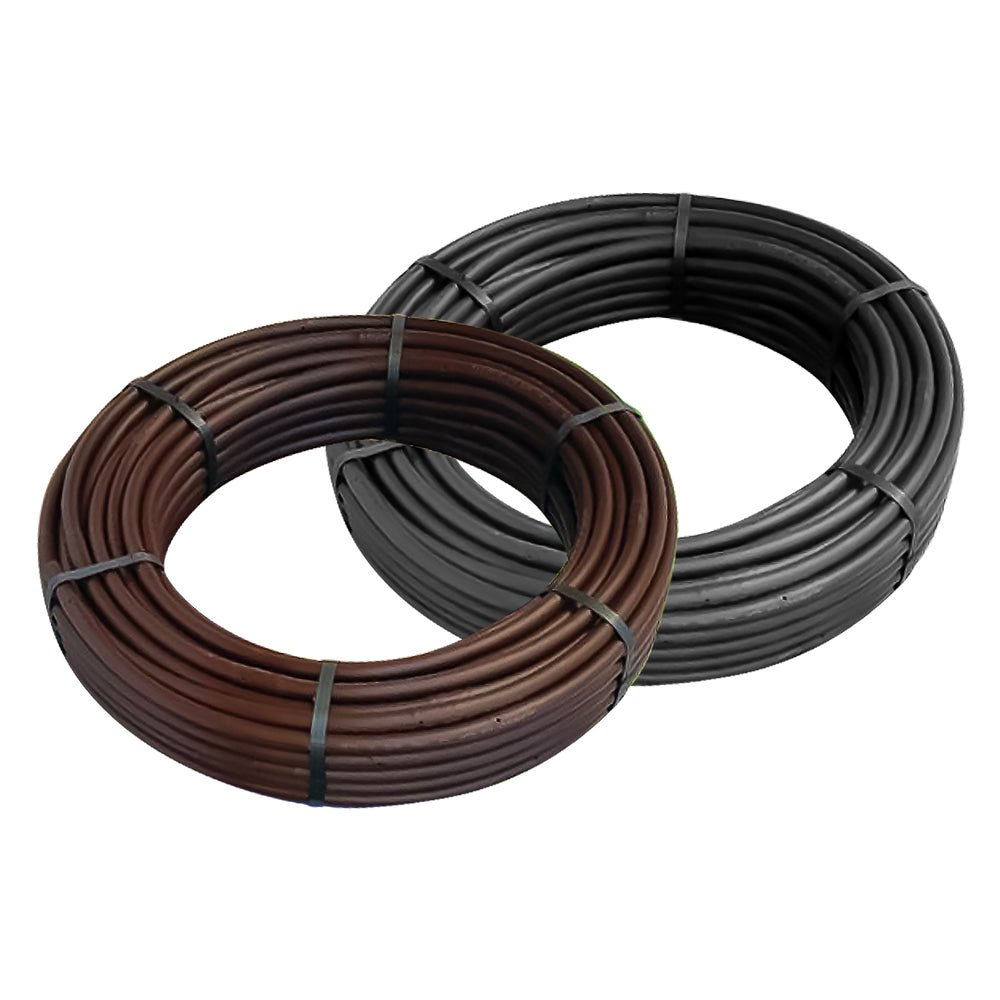
For Drip Line Tube, the declared configurations include: Ø 16 - 33 cm spacing - 25 m roll; Ø 16 - 33 cm spacing - brown 25 m roll; Ø 16 - 33 cm spacing - 50 m roll; Ø 16 - 33 cm spacing - brown 50 m roll; Ø 16 - 20 cm spacing - 100 m roll; Ø 16 - 30 cm spacing - 100 m roll; Ø 16 - 30 cm spacing - brown 100 m roll; Ø 16 - 40 cm spacing - 100 m roll; Ø 16 - 50 cm spacing - 100 m roll; Ø 16 - 33 cm spacing - roll. Identifying the correct version before purchase allows for evaluating bulk, capacity, and compatibility with the equipment or destination environment.
✅ Specific Benefits of Use
The declared characteristics allow for planning work with greater awareness. In the case of the Drip Line Tube, the main benefit is linked to organizing numerous emission points along the crop with a line dimensioned to the project.
- Targeted efficiency: adaptable installation for vegetable gardens and professional crops.
- Technical control: control of connections along the circuit.
- Operational practicality: targeted water management at the root zone.
- Informed choice: distributed delivery along the rows.
Precise assembly and an adequate environment allow the Drip Line Tube to work without improper stress.
🧱 Materials, Structure, and Construction
The choice of materials affects resistance, maintenance, and operating behavior. For the Drip Line Tube, the detectable materials are plastic. Wall, labyrinth, holes, and connections must maintain continuity to distribute water along the path without kinks or crushing.
The technical information available for the Drip Line Tube specifies: Made of low-density linear blended polyethylene, with a short cylindrical turbulent flow dripper, self-cleaning, and equipped with a double integrated inlet filter. 3 overlapping holes, nominal flow rate 2 L/h. Tubes resistant to UV rays, attack by microorganisms and molds, saline water, and acidic or alkaline solutions commonly used in agriculture. Before use, check surfaces, fastenings, edges, and functional parts, avoiding modifications that could alter resistance or compatibility.
⚙️ Technical Data and Operational Function
Measurements and functional characteristics are not secondary details, but selection criteria. For the Drip Line Tube, diameter, roll length, spacing between emitters, flow rate, thickness, and working pressure define the coverage and configuration of the line. The variants must be compared considering the characteristics of the machine, the nature of the material to be treated, and the required performance level.
The function of the Drip Line Tube is oriented towards localized water distribution in vegetable gardens, greenhouses, flowerbeds, and compatible crops. The described configuration includes Ø 16 - 33 cm spacing - 25 m roll; Ø 16 - 33 cm spacing - brown 25 m roll; Ø 16 - 33 cm spacing - 50 m roll; Ø 16 - 33 cm spacing - roll; the manufacturer's manual remains the reference for limits, assembly, adjustments, and necessary protective devices.
🔧 Preparation and Use
Each use requires assembly, adjustment, and preliminary testing. When using the Drip Line Tube, use protective devices consistent with the activity and prevent access to the operating area by uninvolved persons or animals.
- Measure rows, available flow rate, and pressure.
- Unroll the tubing without dragging or twisting it.
- Connect the start and fittings of the correct size.
- Close the end cap and flush the line if required.
- Pressurize and check for uniformity and leaks.
The Drip Line Tube must operate without unusual vibrations, loosening, or sudden changes: in such cases, stop the activity.
🧼 Cleaning, Storage, and Maintenance
For the Drip Line Tube, visual inspection should become part of the normal operational routine. Flush the lines when required, check end caps and connections, avoid kinks and dragging, and empty or protect the tubing during critical seasonal conditions.
Maintenance of the Drip Line Tube does not require improvised interventions: use only compatible methods and products.
🏡 Areas of Professional Use
For the Drip Line Tube, the main application includes irrigation of vegetables, rows, greenhouses, nurseries, flowerbeds, and crops that require distributed emission points. The specific technical reference is: Made of low-density linear blended polyethylene, with a short cylindrical turbulent flow dripper. It can be part of the equipment for demanding private users, green space maintainers, and professional operators when characteristics and working conditions are compatible.
For the Drip Line Tube, the environment, frequency, and material treated affect the result; any different use must be checked beforehand.
🎯 How to Identify the Correct Version
Comparing alternatives helps avoid oversized or unsuitable purchases. For the Drip Line Tube, calculate row length, required spacing, diameter, available pressure, slope, and self-compensation needs. Layflat hose, drip tape, and blank tubing serve different purposes.
Before assembling the Drip Line Tube, check all technical references and seek qualified assistance in case of uncertainty.
WHY CHOOSE IT?
It represents a concrete proposal because the Drip Line Tube organizes numerous emission points along the crop with a line dimensioned to the project. The description highlights the parameters that help understand where it can offer a concrete advantage.
The Drip Line Tube proposal meets concrete needs when the model and characteristics are compared with the actual work.